











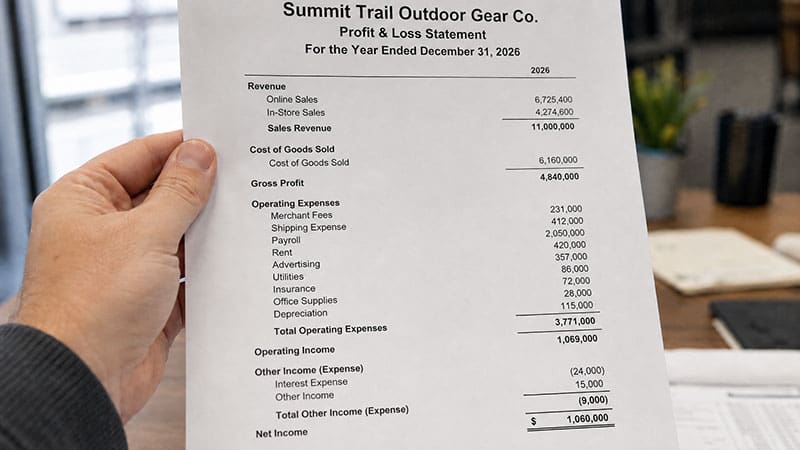





Effective expense management is a fundamental responsibility for any small enterprise seeking sustainable growth. Sound processes reduce waste, preserve capital for investment, and maintain the credibility required for lending and supplier relationships. The following material defines practical approaches and prescriptive remedies that executives and managers can implement immediately to strengthen financial control.
Key Takeaways
- Separate fixed costs from variable costs so break-even analysis is more precise and decisions about scaling up or down are better informed.
- A 12-month rolling forecast refreshed monthly or quarterly tracks actual trends better than a static budget and protects liquidity.
- Formal approval thresholds and expense policies curb unauthorized spending, and zero-based budgeting reallocates money away from nonessential spend.
- Track gross margin by product line, overhead as a percentage of revenue, days payable outstanding, and days sales outstanding alongside cash flow.
- Renegotiating terms, consolidating suppliers, and just-in-time purchasing can cut working capital needs and per-unit costs.
Expense Planning For Small Business: A Practical Guide
Why Expense Planning Is Essential
A disciplined approach to expense planning for small business operations ensures that limited resources are allocated to activities that advance strategic objectives. Without a formal plan, recurring expenditures drift upward, margins compress, and the business may encounter periodic shortfalls that undermine confidence among stakeholders. The core objective of expense planning is to create predictable outcomes through informed decision-making.
The Financial Foundations You Must Know
Accounting Basics Every Manager Should Master
Accounting basics form the foundation of any credible expense plan. Familiarity with income statements, balance sheets, and trial balances enables managers to identify cost drivers and prioritize corrective action. Quarterly reconciliations and accrual accounting practices reduce surprises and support reliable projections.
Understanding Cash Flow For Operational Stability
Cash flow is distinct from profitability; it measures the timing and availability of liquid resources. A profitable quarter can coexist with cash shortages if receivables are delayed or inventory is mismanaged. Effective expense planning for small business requires continuous monitoring of cash flow to avoid solvency issues and to optimize working capital.
Common Categories Of Small Business Expenses
Operational categories typically include personnel, rent and facility costs, materials and production inputs, marketing, technology and subscriptions, and professional services. Classifying expenditures correctly supports scenario modeling and targeted cost reductions without compromising strategic capabilities.

Expense Planning For Small Business: Core Principles
Principle 1: Distinguish Fixed Versus Variable Costs
Fixed costs remain constant despite sales volume changes; variable costs move in proportion to activity levels. Segregating these allows for more precise break-even analysis and informs decisions about scaling operations during growth or contraction.
Principle 2: Adopt Rolling Forecasts Rather Than Static Budgets
A 12-month rolling forecast refreshed monthly or quarterly aligns projections with actual trends. This agility is central to maintaining liquidity and responding to market shifts.
Principle 3: Establish Accountability And Approval Workflows
Formal approval thresholds and expense policies reduce unauthorized spending. Linking approvals to real-time financial dashboards increases transparency and enforces compliance.
Principle 4: Integrate Expense Planning With Strategic Goals
Expense controls should not be implemented in isolation. They must reflect the company’s strategic priorities, such as investment in customer acquisition, product development, or geographic expansion, and be adjusted as those priorities evolve.
Remedy 1: Implement Zero-Based Budgeting
Ingredients/Required Materials
– Access to the company’s detailed ledger and recent expense reports
– Departmental process maps and headcount lists
– A spreadsheet or budgeting software configured for zero-based workflows
– Time allocation from department heads for line-item justification
Step-By-Step Creation And Application
1. Inventory All Expense Lines: Compile every expense line from the ledger for the prior 12 months. This creates a comprehensive baseline.
2. Assign Ownership: Designate a department head or process owner for each expense line to ensure accountability.
3. Require Justification: For each line, require a written justification tying the expense to a specific operational outcome or a legal/compliance obligation.
4. Prioritize By Value: Rank items by strategic contribution and return on expense. Eliminate or reduce lines with poor justification or low strategic value.
5. Reallocate Savings: Redirect savings to prioritized growth initiatives or to strengthen cash reserves for cyclical risk.
6. Review Regularly: Repeat the zero-based review annually or whenever strategic priorities change, and incorporate findings into the rolling forecast.
When applied properly, this remedy reduces nonessential spend and reallocates resources to activities with measurable impact. The process should be formalized in policy to ensure continuity through leadership changes.
Expense planning is far easier against a written plan. The free business budget and cash flow templates give you one with the categories and formulas already in place.
Remedy 2: Establish An Automated Expense Control System
Ingredients/Required Materials
– Accounting software with expense management modules
– Corporate card controls and purchase order (PO) workflow tools
– Employee training materials and an expense policy document
– Integration capacity for bank feeds and payroll systems
Step-By-Step Creation And Application
1. Select Appropriate Tools: Choose software that integrates with your general ledger and supports automated approvals, receipt capture, and PO matching.
2. Define Policies: Codify spending limits, preferred vendor lists, and allowable expense categories in a formal policy document.
3. Configure Controls: Set system rules for card usage thresholds, mandatory PO requirements for larger purchases, and matched receipts for reimbursement.
4. Train Teams: Conduct mandatory training sessions to ensure all employees understand policy and system use, including acceptable exceptions.
5. Monitor Exceptions: Create reports that highlight policy exceptions, late approvals, and anomalies for swift investigation.
6. Iterate: Use historical data to refine rules and thresholds, adjusting automation to the company’s risk tolerance and operational needs.
Automated systems bolster internal controls, reduce administrative burden, and improve the timeliness of data used in expense planning for small business decision-making.
Managing Vendor Relationships To Reduce Costs
Renegotiating terms, consolidating suppliers, and implementing just-in-time purchasing can materially reduce working capital requirements and lower per-unit costs. Leverage purchase histories to pursue volume discounts and ensure contracts include performance and escalation clauses.
Using Metrics To Guide Expense Decisions
Key performance indicators should include gross margin by product line, overhead as a percentage of revenue, days payable outstanding (DPO), and days sales outstanding (DSO). Tracking these metrics alongside cash flow gives a nuanced view of financial health and the impact of expense initiatives.
When To Seek External Expertise
Certain scenarios justify external advice: rapid scaling, preparing for funding rounds, complex tax situations, or when internal capability gaps exist. Professional advisors can implement advanced cost-allocation models, recommend accounting systems aligned with industry best practices, and train staff on accounting basics to sustain improvements.
Embedding Expense Planning Into Corporate Governance
Expense planning for small business must be a regular agenda item in leadership meetings with an assigned owner and a published cadence for reporting. Board-level oversight of expenditure trends and contingency plans for revenue contractions reduces strategic risk.
Common Pitfalls And How To Avoid Them
– Overly Aggressive Cuts: Reductions that impair revenue-generating functions produce long-term harm.
– Poor Data Quality: Incomplete or inaccurate records undermine planning; enforce reconciliations and standardized chart of accounts.
– Lack Of Employee Buy-In: Engage managers early and communicate the rationale for changes to obtain cooperation.
– Ignoring Cash Timing: Expense reductions that do not consider payment timing may create short-term liquidity shortages despite improved profitability.
Building Resilience Into Your Expense Plan
Include scenarios for demand shocks, supply disruptions, and credit tightening. Maintain an operating cash buffer sized to at least three months of fixed costs and establish lines of credit or contingency financing before stress occurs. Scenario modeling that links expense adjustments to cash flow outcomes strengthens decision-making and reduces reactive behavior.
Training And Capacity Building
Invest in staff training on accounting basics and expense policy compliance. Practical workshops, access to updated procedural manuals, and periodic audits increase adherence and reduce costly errors.
Ensure each element of the plan is documented, assigned to an owner, and scheduled for review. Effective expense planning for small business is an ongoing discipline that balances control with strategic flexibility, and the practical remedies described here provide a structured pathway to that objective. Expense planning is one piece of learning how to manage a small business without guesswork.