
















The books are a mess, invoices vanish, payroll breaks, and beneath the chaos sits a single cause: the wrong accounting system. This guide walks through how to choose an accounting system that protects your time, your sanity, and possibly your business. The right answer often depends on who will run it, which is why what a small business accountant does is a useful starting point.
Key Takeaways
- Reconciliations that take weeks, vanishing invoices, tax penalties, heavy manual entry, and multi-entity strain are signs you need a new system.
- Look for automatic bank feeds, rules-based categorization, approval workflows, customizable reports, full audit trails, and role-based access.
- Compare total cost of ownership over three years, since cheap monthly plans often fragment features into modules that inflate the bill.
- Shortlist three to five vendors and score each on a structured demo where they perform sample tasks using your own data.
- Implementation runs from data mapping and cleanup through a sandbox pilot, reconciliation tests, training, and a go-live during a low-transaction period.
Why The Wrong System Is A Financial Time Bomb
Pick the wrong platform and errors cascade: misposted income, late payments, tax penalties. Every misstep compounds. Choosing an accounting system is not a checkbox on your onboarding list. It is a strategic decision with real stakes. The right system stops surprises before they start; the wrong one turns your financial life into a slow-motion problem. If the business itself is brand new, start with a financial checklist for a new business.
Five Signs You Need A New System
- Reconciliation takes weeks and still doesn’t balance.
- Invoices disappear or get duplicated.
- You pay penalties because tax data is inconsistent.
- Your team spends more time on manual data entry than analysis.
- Your bookkeeping cannot keep up with growth or multi-entity complexity.
If any of these sound familiar, you are in the market for a change, and diagnosing these symptoms is the right place to start.
Key Features That Separate Winners From Disasters
Scalability And Multi-Entity Support
You want a system that grows with you. A platform that promises scalability but caps essential features at higher tiers is a trap.
Automation And Workflow Controls
Automation reduces human error. Look for automatic bank feeds, rules-based categorization, and approval workflows.
Reporting, Dashboards, And Audit Trails
Rich, customizable reports and complete audit trails are non-negotiable for investors, lenders, and auditors.
Integration Ecosystem
Your accounting system must work smoothly with payroll, CRM, inventory, and e-commerce platforms. Integration reduces manual imports and lost data.
Security, Access Controls, And Compliance
Financial data is a crown jewel. Expect enterprise-grade security, role-based access, and compliance features for taxes, VAT/GST, and local regulations.
Criteria Checklist
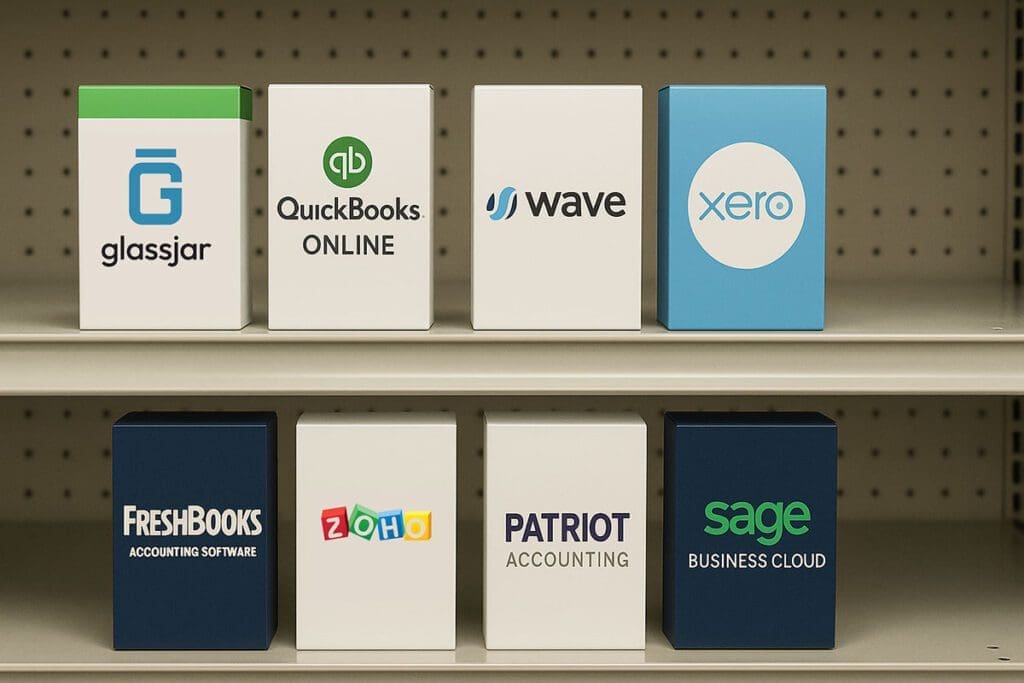
Nobody likes long vendor demos, but structured evaluation is what keeps a sales pitch honest. Use this checklist to compare vendors objectively: core capabilities (GL, AR, AP, bank feeds), automation depth, reporting flexibility and export options, integration with payroll and POS systems, user access and permissioning, implementation effort and total cost of ownership, and the quality of vendor support and documentation. This list turns the decision into measurable criteria.
Pricing Models: Subscription Trap Or Real Value?
Beware of seductive low monthly fees. Many vendors fragment capabilities across modules, so the “cheap” plan balloons into an enterprise bill. Compare total cost of ownership over three years, including licensing, migration, training, integrations, and maintenance. That calculation keeps the decision economic instead of emotional.
The Role Of Accounting Software And Bookkeeping In Your Decision
Your new platform must fit your bookkeeping processes. If your bookkeeping is manual and chaotic, accounting software alone will not fix it without process redesign. If you already use modern bookkeeping practices, the right accounting software becomes a force multiplier.
Vendor Shortlist Strategy
Create a shortlist of three to five vendors that meet your baseline needs. Invite them to a structured demo where they must perform sample tasks using your data. Score each demo against the checklist above. This method turns subjective sales pitches into data-driven decisions.
Implementing Your Selected System, Step By Step
- Project kickoff: appoint an implementation lead and core team. Define scope, timeline, milestones, and a risk register.
- Data mapping: map the legacy chart of accounts to the new system. Standardize naming conventions and account numbers.
- Data cleanup: reconcile outstanding items, resolve uncleared checks, and correct historical misclassifications.
- Pilot environment: deploy a sandbox and import a subset of cleaned data for validation.
- Configure core modules: set up GL, AR, AP, tax codes, bank feeds, user roles, and approval workflows.
- Integrations: connect payroll, CRM, POS, and inventory systems, then validate end-to-end transactions.
- Reconciliation tests: run full-period reconciliations and compare with the legacy system to validate balances.
- Training: deliver role-specific training sessions and documentation for routine tasks and exceptions.
- Go-live: migrate remaining data, switch bank feeds, and execute the go-live checklist during a low-transaction period.
- Post-go-live support: monitor for discrepancies, run parallel reporting for a week, and adjust processes as needed.
Migrating From Legacy Systems Without Drama
- Inventory legacy data: catalogue every table and report to be migrated, including open invoices, recurring payments, vendor credits, and payroll history.
- Establish data retention rules: decide which history must be migrated versus archived.
- Build migration templates: use vendor-provided CSV templates or APIs and test with a single month of data.
- Validate transformation rules: confirm date formats, currency conversions, and tax rate mappings are correct.
- Reconcile at each stage: after migrating each data slice, reconcile to the legacy system to catch errors early.
- Cutover plan: choose a cutover date with minimal transaction volume and freeze postings during the final migration window.
- User transition: shift bookkeeping responsibilities in phases and provide on-the-job support through the first payroll cycle after migration.
- Audit and adjust: run a full audit after 30 and 90 days to confirm the integrity of AR, AP, and tax liabilities.
Training And Change Management
Training should not be a one-off webinar. Create role-based materials, cheat sheets, and a ticketing system for early issues. Bookkeeping staff need to understand not just the tool but the logic behind its automation rules. Technology is only as good as the people using it.
Negotiation Tactics That Save Thousands
Use your shortlist as leverage. Ask for implementation credits, flat migration pricing, and a dedicated onboarding manager. Negotiate uptime SLAs and penalties for missed timelines. Sellers expect negotiations, so use them.
Choosing For Growth And Exit Strategies
If you plan to scale, raise capital, or sell, choose a system that produces audit-ready reports and supports multi-entity consolidation. Buyers and auditors want clean, exportable, verifiable books. The choice you make now affects valuations later, so factor long-term strategy into the decision.
Final Checklist: Are You Ready To Decide?
- Can it automate most of your bookkeeping pain points?
- Does it integrate with your tech stack without costly middleware?
- Is the total cost predictable?
- Will your finance team embrace it with minimal resistance?
- Can the system handle the next three to five years of growth?
Make the leap only when the answers tilt overwhelmingly toward yes. The right decision ends the drama and begins an era where your books are predictably accurate, insightful, and, dare we say, boringly reliable.