














Search for cloud accounting software and nearly every result is a ranking. Rankings tell you which products are popular. They don’t tell you which features will keep your books clean at the end of a long week when you’d rather be doing anything else.
This guide is the other half of the decision. It covers the ten cloud accounting software features a U.S. small business actually uses, why each one earns its place, and what to test during a free trial so you find out before you migrate rather than after.
Key Takeaways
- Bank feeds and invoicing are the two features you touch every week. Test them first, with your own accounts.
- Budgets, custom tags, and saved reports are what turn bookkeeping into information you can run the business on.
- Permissions and an activity log become mandatory the day a second person touches the books.
- Count the number of screens a transaction takes. That number, more than any feature list, predicts how much time the software costs you.
1. Bank feeds and automatic transaction import
The single connection that replaces hours of copying numbers from a statement. Your software should pull transactions from your bank and card accounts automatically, categorize them on the way in, and give you a reconciliation screen where matching against invoices, bills, and receipts takes a few clicks rather than a spreadsheet.
During a trial, connect your primary operating account and reconcile a full month. A broken or delayed feed creates more work than it saves, and demo data won’t tell you how the software behaves with your bank. GlassJar’s bank integration imports and categorizes transactions and reconciles them against your records from one screen.
2. Invoicing that records the payment too
Sending an invoice is the easy half. The half that costs time is what happens after: tracking what is open, recording the payment when it arrives, and clearing the receivable so month-end doesn’t involve matching deposits to invoices by hand.
Look for the whole cycle in one place. In GlassJar, invoices, payments, and every other transaction type are entered from a single screen, and open, overdue, and paid are visible without running a report.
3. Expense tracking with consistent categories
Every dollar out needs a category, and categorizing by hand gets old fast. The platform should do the first pass on imported transactions so your work becomes review and correct rather than type and guess.
Consistency matters most at tax time. When the same vendor lands in the same category every month, year-end totals are ready without a January cleanup. Check how easy it’s to correct a category, and whether corrections can be made in bulk.
4. Bill management and payables visibility
If you pay vendors and contractors regularly, you need one place to record a bill, see everything outstanding sorted by due date, and mark it paid. A missed due date costs late fees and goodwill.
GlassJar’s bill management keeps payables next to receivables, so what you owe and what you are owed sit in the same view.
5. Budgets that compare to actuals
A budget only helps if you can compare it to reality every month without exporting anything. Look for category-level budgets, a plain view of where you’re over or under, and the ability to adjust mid-year when the plan changes.
Many popular platforms treat budgeting as an add-on or a top-tier feature. GlassJar includes budgeting on every plan, with variance reporting so you can see the gap by category.
6. Reports you can customize and save
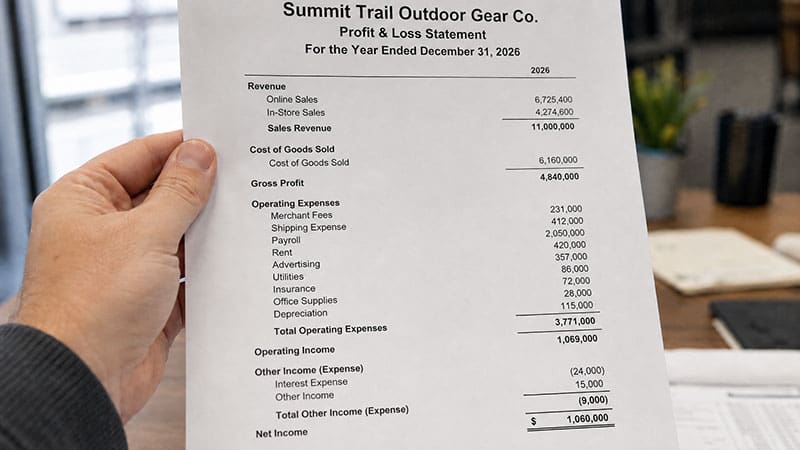
Profit and loss, balance sheet, and cash flow are the floor. The useful question is whether you can slice them by date range, tag, customer, or project, then save that view and rerun it next month with one click.
In GlassJar, each user chooses which reports appear on their dashboard, so the handful of reports you actually run are on the first screen instead of somewhere deep in a long library. Customizations are saved and reusable.
7. Custom tags for a second dimension
The chart of accounts tells you what kind of expense something was. It can’t tell you which project, location, client, or campaign it belonged to. Tags add that second dimension without cluttering the chart of accounts with duplicate accounts.
The thing to verify is coverage. Tags should apply to every transaction type, so reports filtered by tag don’t have holes in them. GlassJar’s custom tags are built in and usable in reporting.
8. 1099 contractor tracking
If you pay independent contractors, you are responsible for 1099 reporting, and the penalties for missing forms add up. The software should track contractor payments as they happen and produce the year-end report without a separate system or a spreadsheet reconstruction.
GlassJar’s contractor management assigns payments to 1099 categories as you record them, keeps payment history per contractor, and exports the report at filing time.
9. User roles and an activity log
The moment a second person touches the books, sharing one login becomes a security problem and an audit headache. Your bookkeeper needs edit access to expenses. Your accountant needs to review without deleting. A part-time assistant needs less than either.
GlassJar’s user roles let you set permissions per role, and activity tracking shows who changed what and when. Every plan includes more than one user.
10. Contact records that hold more than one role
In a small business the same company is often a customer, a vendor, and sometimes a contractor. Most software forces a separate record for each role, which is where duplicates and reconciliation errors come from.
Look for a single contact that can carry every role. GlassJar’s contact management works this way, and it allows two contacts to share a name when two different businesses genuinely do.
Two more worth checking
Check printing, because plenty of U.S. businesses still pay rent and some vendors by paper check. GlassJar includes check printing in the product rather than through an add-on.
And support. Software questions arrive at the worst moments, usually during a close or a filing deadline. Confirm live chat is available on the plan you’re buying. GlassJar has live chat on all three plans, Foundation included.
How the major platforms handle these features
QuickBooks Online has the broadest feature set across several tiers, native payroll, and the largest accountant network in the U.S. Report customization and some features scale with plan price, and each plan caps the number of users.
Xero includes unlimited users on every plan, a clean reconciliation screen, and a large app marketplace. Its entry plan limits invoices and bills per month, and advanced reporting and approvals generally come from third-party apps.
FreshBooks is built around invoicing and time tracking for service businesses, with a polished mobile experience. General ledger depth and reporting are more limited than full accounting platforms.
Zoho Books fits businesses already on other Zoho products. Its automation rules are detailed, but several capabilities you might expect in accounting live in separate Zoho apps.
Wave is free for very small operations and covers invoicing and basic reports. Bank connections require the paid Pro plan, and there’s no budgeting, limited permissions, and little report customization.
Why features beat brand names
Choosing on name recognition is how small businesses end up paying for tools they never open, or missing the one they needed. Start with your own week: how many invoices you send, how many bills you pay, who else needs access, and what your accountant asks for in January. Then test the two or three features you’ll use most, with real data, before you decide.
GlassJar is cloud accounting software built around that list, with bank feeds, invoicing, expense tracking, bill management, budgets, reporting, tags, contractor management, user roles, and check printing in one product. Every transaction type is entered from one screen. There is a 14-day free trial, and early access opens October 1, 2026. Plan details are on the pricing page.
Frequently asked questions
What is cloud accounting software?
Accounting software that runs on the vendor’s servers and is used through a browser, so your books are available from any device, backed up automatically, and updated without installing anything.
Which features should I test first in a free trial?
Bank feeds and invoicing. Connect your main account, reconcile a month, and send one real invoice. If those two workflows feel right, the software fits your week.
Do I need budgeting inside my accounting software?
If you compare spending to a plan each month, yes. A built-in budget uses live transaction data, so you’re never comparing against numbers that were exported two weeks ago.
Can one platform handle invoicing, expenses, and reporting together?
Yes, and that’s the point. When all three share the same data, every report agrees with every other report, and there’s nothing to reconcile between tools.
What if my business outgrows its plan?
Choose software with more than one tier. GlassJar’s Foundation, Core, and Advanced plans add capability without a migration or any loss of history.