













Asset management is the process of tracking assets throughout their life cycle (from purchase to disposal) in order to keep accurate financial records and make timely replacement decisions.
First, though, let’s clear up one point. As used in finance, ‘asset management’ refers to the management of a portfolio of investments on behalf of another party. In business, however, and on this page, ‘asset management’ refers to the physical and intangible assets used by a company to conduct its business. Same words, entirely different activities.
Key Takeaways
- Asset management in a small business means knowing what you own, what it is worth on the books today, what it costs to keep, and when to replace it.
- It is a different discipline from investment or wealth management, which uses the same phrase for managing a portfolio of securities.
- The foundation is a fixed asset register. Without one, depreciation is guesswork and the balance sheet slowly stops being true.
- Anything with a useful life beyond a year and a cost above your capitalization threshold gets capitalized and depreciated rather than expensed.
- An asset never removed from the books after it was scrapped inflates your balance sheet and distorts every ratio built on it.
What counts as an asset
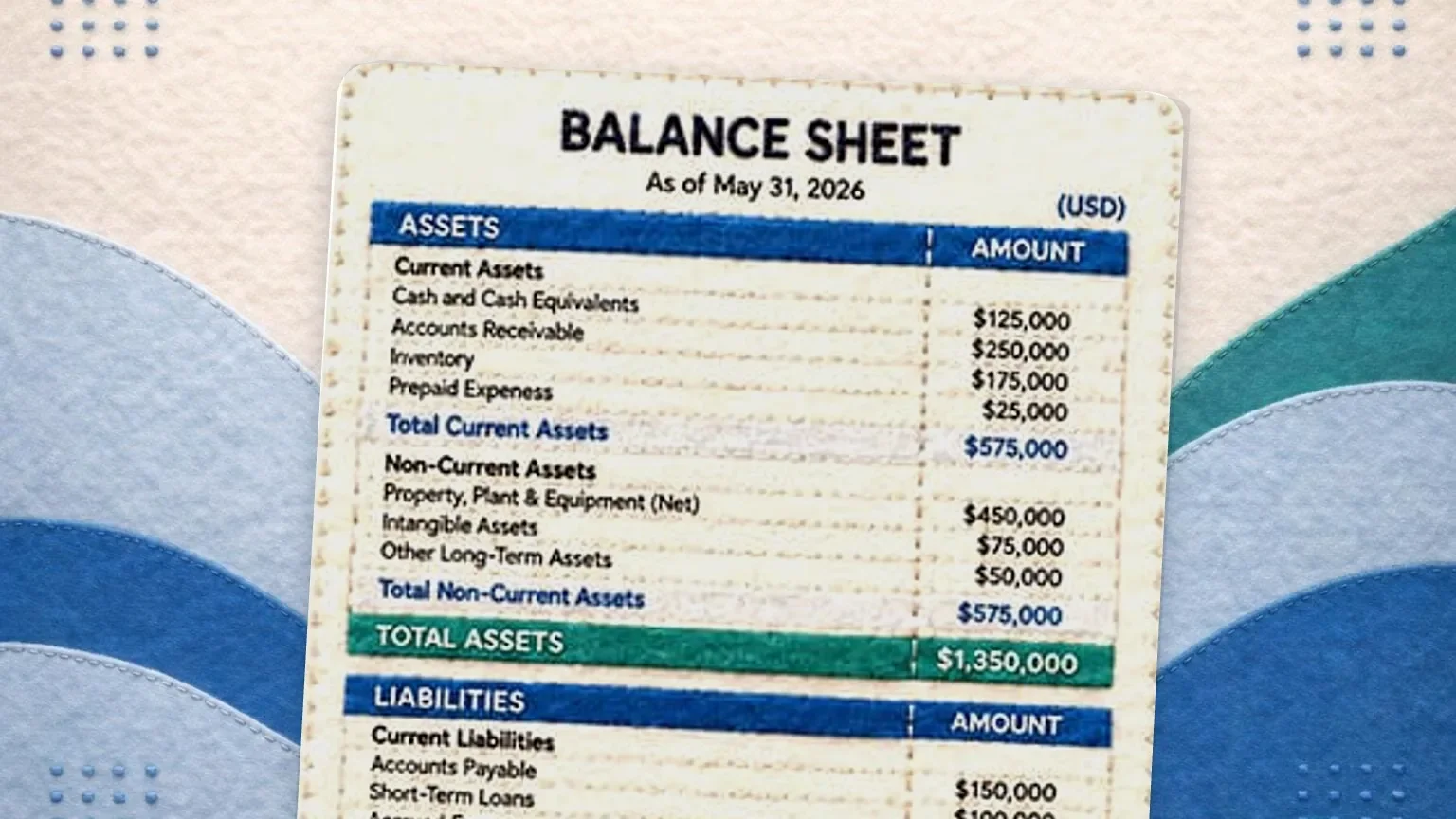
Assets are resources that are owned by a company in order to generate future value for the business. They can be categorized into two groups.
| Split | Categories | Examples |
|---|---|---|
| By how quickly they convert to cash | Current assets | Cash, receivables, inventory, prepaid expenses |
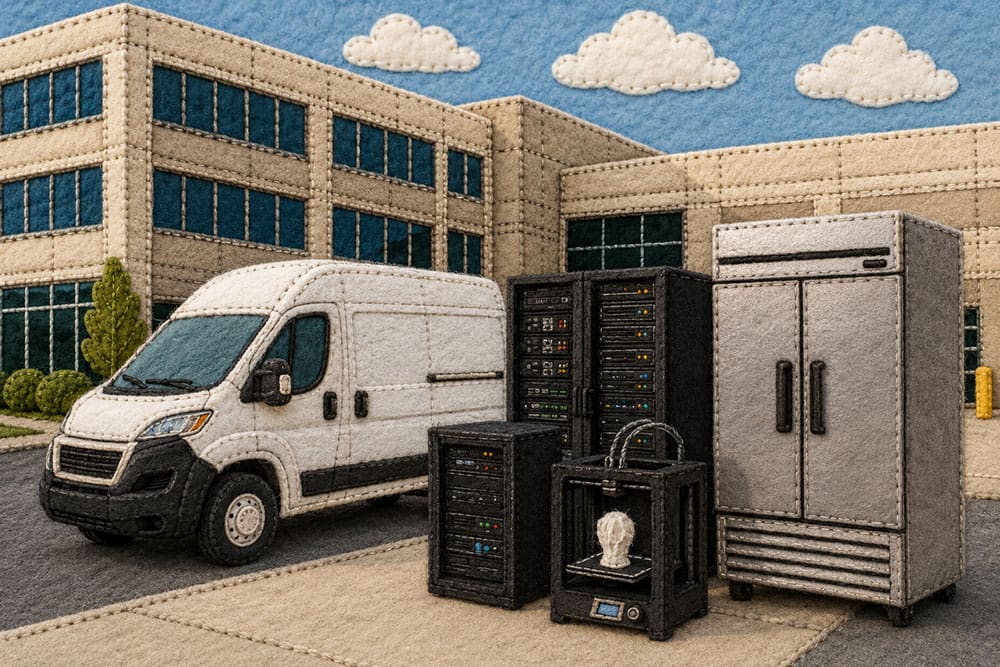
| Fixed assets | Vehicles, equipment, computers, furniture, buildings, leasehold improvements | |
| By whether you can touch them | Tangible | Machinery, fixtures, inventory |
| Intangible | Trademarks, patents, purchased software licenses, domain names, customer lists |
Asset management is mostly concerned with the fixed side. Current assets get managed through cash flow and inventory processes instead. Fixed assets are where the tracking discipline pays, because they sit on the books for years and quietly go wrong.
The capitalization threshold
Not every purchase is an asset. A $40 stapler can last for five years and no one would consider depreciating it.
The dividing line is a capitalization policy: a dollar threshold above which a purchase with a useful life beyond one year is recorded as an asset rather than an expense. Federal rules let a business without an applicable financial statement elect a de minimis safe harbor, commonly set at $2,500 per item, and businesses frequently adopt that figure as their internal threshold. The election has to be made on a timely filed return, so it is worth confirming with your accountant rather than assuming.
For any threshold chosen, write down the threshold and stick with it. It would be very bad practice to have a threshold that drifts from year to year, leaving a fixed asset register full of laptops in one year and none in the next.
The fixed asset register

This is the core artifact. Everything else in asset management either feeds it or reads from it. At minimum each entry should carry:
- A unique asset ID or tag number
- Description, make, model, and serial number
- Acquisition date and purchase cost, including delivery and installation
- Location and the person or department responsible
- Useful life and the depreciation method applied
- Accumulated depreciation to date and current net book value
- Warranty expiry and maintenance history
- Disposal date, method, and proceeds, once it leaves
A spreadsheet is a perfectly legitimate register for a business with twenty assets. However, it will stop being adequate somewhere around the point where more than one person needs to update it or where the depreciation schedule takes longer to maintain than it takes to read.
How the accounting works
Acquisition
The cost of the asset includes the purchase price plus the costs to get it into operation, such as the cost of delivery, installation, setup and any non-refundable taxes. Thus, a $22,000 machine with $1,800 of delivery and rigging costs would be capitalized at $23,800 rather than at $22,000.
| Account | Debit | Credit |
|---|---|---|
| Equipment | $23,800 | |
| Cash or accounts payable | $23,800 |
Depreciation
Depreciation spreads the cost of an asset over the years it is used, recognizing expense in the periods that benefit from the asset.
In most small business books, straight line is the simplest method and the most common. Cost less salvage value, divided by useful life. So for example, a $23,800 machine with a $2,800 salvage value and a 7 year life would depreciate at $3,000 per year.
| Account | Debit | Credit |
|---|---|---|
| Depreciation expense | $3,000 | |
| Accumulated depreciation | $3,000 |
Accumulated depreciation is a contra-asset account. It is listed on the balance sheet under the asset being depreciated and is used to reduce the value of that asset on the balance sheet. In the register, the original cost and the accumulated depreciation are listed separately. The net book value is the original cost less the accumulated depreciation.
Tax depreciation is a separate calculation using the modified accelerated cost recovery system, often with a Section 179 election or bonus depreciation layered on top. Book depreciation and tax depreciation routinely differ, and that is normal rather than an error.
Disposal
This is the step most often skipped, and skipping it is what makes a balance sheet gradually untrue.
Say the machine is sold after six years for $5,000. Accumulated depreciation is $18,000 against the $23,800 cost, so book value is $5,800 and there is an $800 loss.
| Account | Debit | Credit |
|---|---|---|
| Cash | $5,000 | |
| Accumulated depreciation | $18,000 | |
| Loss on disposal of asset | $800 | |
| Equipment | $23,800 |
The cost and the accumulated depreciation are removed from the books. If the asset is scrapped with no proceeds then the entry is made with a larger loss, equal to the full book value of the asset. If no entry is made then the asset remains on the balance sheet forever, depreciating an object that no longer exists.
What an asset management system does
For a growing business the register eventually needs to live in software rather than a file. What that software adds, beyond storage:
- Automatic depreciation. Schedules calculate and post themselves, for book and tax, without a monthly spreadsheet exercise.
- A single source of truth. Finance, operations, and whoever holds the equipment are looking at the same record.
- Maintenance scheduling. Service intervals and warranty expiries surface before something fails rather than after.
- Audit trail. Who moved what, when, and on whose authority.
- Tagging and physical verification. Barcode or QR tags make an annual count a short job instead of a two day one.
Usually the decision to go with a dedicated asset management system or the Fixed Asset module within your accounting system is based on volume and complexity. Under 100 assets in 1 or 2 locations, the accounting system is usually more than adequate and you have the data where the depreciation entries are already recorded.

The recurring tasks
Asset management is not a project; it is a short list of activities to be performed on a regular basis.
| Frequency | Task |
|---|---|
| Monthly | Post depreciation. Add new acquisitions to the register. Record any disposals. |
| Quarterly | Reconcile the register total against the fixed asset accounts in the general ledger. |
| Annually | Physical count and verification. Review useful lives and salvage values. Write off assets that no longer exist. |
| As needed | Update location and custodian when equipment moves. Log maintenance and repairs. |
The quarterly reconciliation is the one that catches problems. If the register reports $412,000 of gross fixed assets and the ledger reports $438,000, then something was posted to the asset account but never recorded in the register. It’s easier to find these errors after 3 months than after 3 years.
Why it matters beyond compliance
- The balance sheet is only as good as the register. Ghost assets, meaning items still on the books that were disposed of or stolen, overstate total assets and equity.
- Depreciation is a real deduction. Assets missing from the register are not being depreciated, which means a deduction is being left on the table every year.
- Insurance follows the record. A claim is settled against what you can document. An unrecorded asset is a difficult conversation.
- Replacement planning needs a date. A register with acquisition dates and useful lives tells you what is due for replacement in the next eighteen months, which is a capital budget rather than an emergency.
- Ratios built on assets become readable. The clearest of these is fixed asset turnover, which measures how much revenue each dollar of equipment actually produces. It is meaningless if the denominator contains equipment that is long gone.
Where to start if you have nothing
Walk the premises with your phone, photograph everything of value, pull the last three years of purchases over your threshold out of the accounting system, reconcile the two lists (they won’t agree), tag what you have, set useful lives, build the depreciation schedule forward from today and write off what you can’t find.
It is a day of work for most small businesses, and it is the only version of this that ever gets easier afterwards.
Frequently asked questions
What is asset management in a small business?
The tracking of the business’s assets throughout their useful life. This would include recording the purchase, depreciation, maintenance and disposal of the assets to ensure that the balance sheet is accurate and that replacements are made on time.
What is an asset management system?
Fixed asset software manages fixed asset registers and automatically updates depreciation schedules, maintenance reminders, location and custodian information, and provides an audit trail. Fixed asset software within accounting software is typically adequate for businesses with under 100 fixed assets.
What is asset management in accounting?
Accounting for fixed assets is the set of processes used to maintain fixed asset accounts including: capitalizing fixed assets above a specified dollar amount, posting fixed asset depreciation, reconciling fixed asset register to general ledger, and removing fixed assets on disposal.
What counts as a fixed asset?
Assets that are owned by the business and used in operations for more than one year with a cost in excess of the business’s capitalization threshold. Examples include vehicles, equipment, computers, furniture, buildings, and leasehold improvements.
What are the main asset management tasks?
Monthly depreciation is posted to the asset register on a monthly basis. The register is reconciled against the ledger on a quarterly basis. A physical count of fixed assets is conducted annually and the useful lives of assets are reviewed. Asset movements and maintenance are logged on an ongoing basis.
What is a ghost asset?
Ghost assets are items recorded in the company’s books and records that have been sold, scrapped, lost or stolen. They overstate total assets and equity and distort any ratio based on the balance sheet.