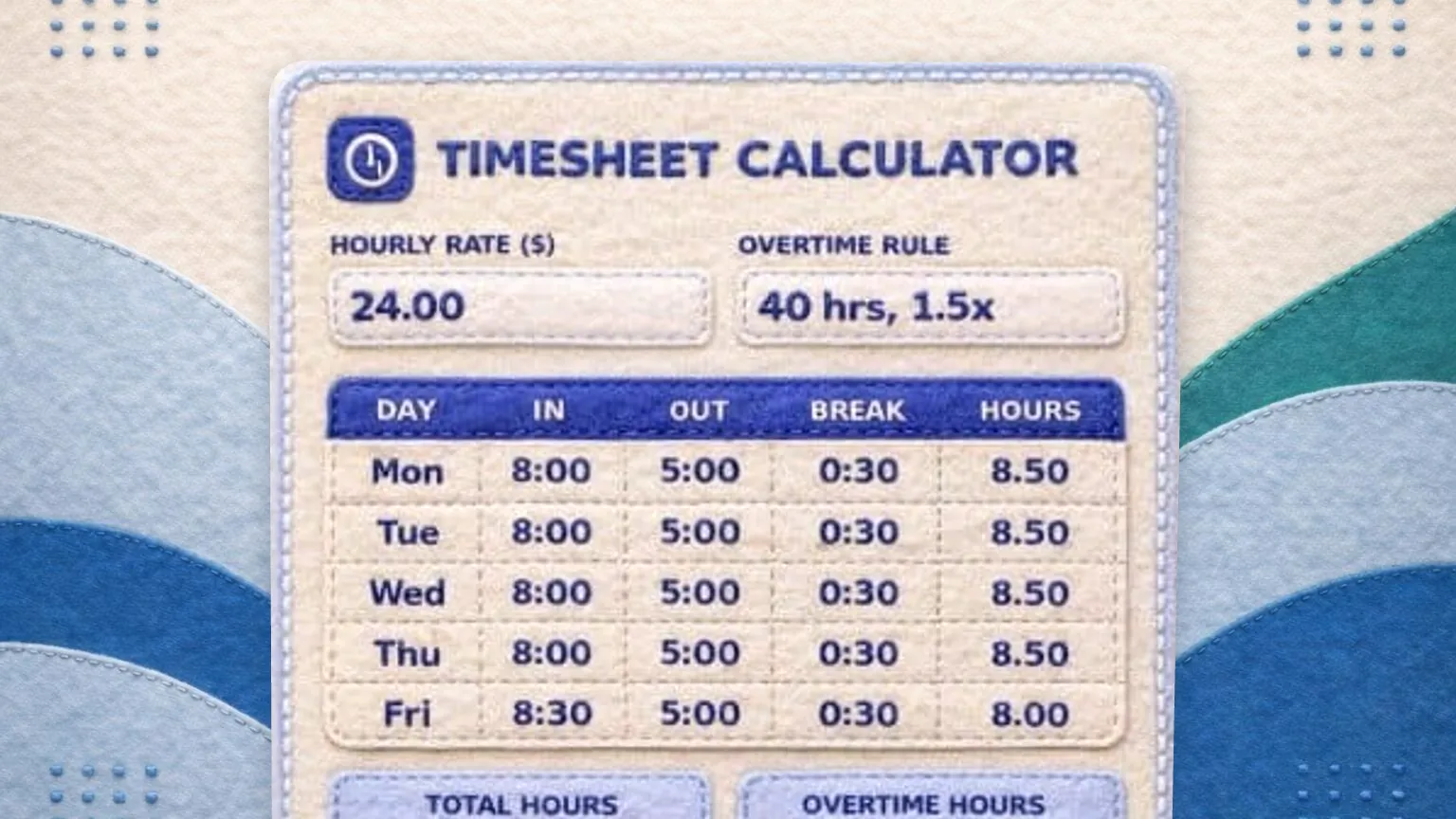
Bookkeeping records what happened. Accounting decides what it means and what you owe. Almost every small business needs bookkeeping every month and accounting a few times a year, and the common mistake is paying for the second while skipping the first.
The two words get used as if they were the same job because the same person often does both. They are different work with different skills, different timing and very different prices. Getting the split right is usually the cheapest improvement available to a small business’s finances.
Key Takeaways
Bookkeeping records day-to-day transactions such as sales, purchases, receipts, and payments, while accounting interprets that data into insights and guidance.
A bookkeeper maintains the general ledger, reconciles bank accounts, records invoices, processes payroll, and manages receivables and payables.
Accountants prepare financial statements, perform audits, and use ratios, forecasts, and cash flow analysis to guide planning decisions.
Training differs too, since bookkeepers often learn through courses and certifications while accountants usually hold an accounting degree and may pursue licenses.
Many small businesses start with bookkeeping alone and add an accountant as they grow, and outsourcing offers either without a full-time hire.
The short version
Bookkeeping is the recording layer. Transactions get entered and categorized, bank and card accounts get reconciled, invoices go out, bills get entered, and at the end of the month the books agree with the statements. It is detailed, repetitive and time sensitive, and it either happens or it does not.
Accounting is the interpretation layer. It takes those recorded transactions and produces financial statements, applies accrual treatment to things that span periods, posts depreciation and adjusting entries, files the tax return and answers questions like whether you can afford a hire.
The dependency only runs one way. Accounting built on bad bookkeeping produces confident, wrong answers. Bookkeeping with no accounting on top produces accurate records nobody has drawn a conclusion from.
CPA or equivalent for attestation and most tax work
What breaks without it
Nothing ties, and every later number is suspect
You have records but no conclusions, and tax risk
What a bookkeeper actually does
A bookkeeper owns the month. Bank and credit card transactions get categorized to the right account, which is the single largest determinant of whether your reports mean anything. Every bank and card account gets reconciled against its statement, so the balance in your books equals the balance the bank agrees with. Customer invoices get raised and tracked, so you know who owes you money and for how long. Vendor bills get entered and scheduled, so you know what you owe before it is late. Receipts get attached to transactions, which is what turns a deduction into a defensible deduction.
The output is a set of books that tie. That sounds modest and it is the foundation everything else stands on. If you are not sure what categorizing to the right account means in practice, our debits and credits cheat sheet covers the five account types and which side increases each one.
What an accountant actually does
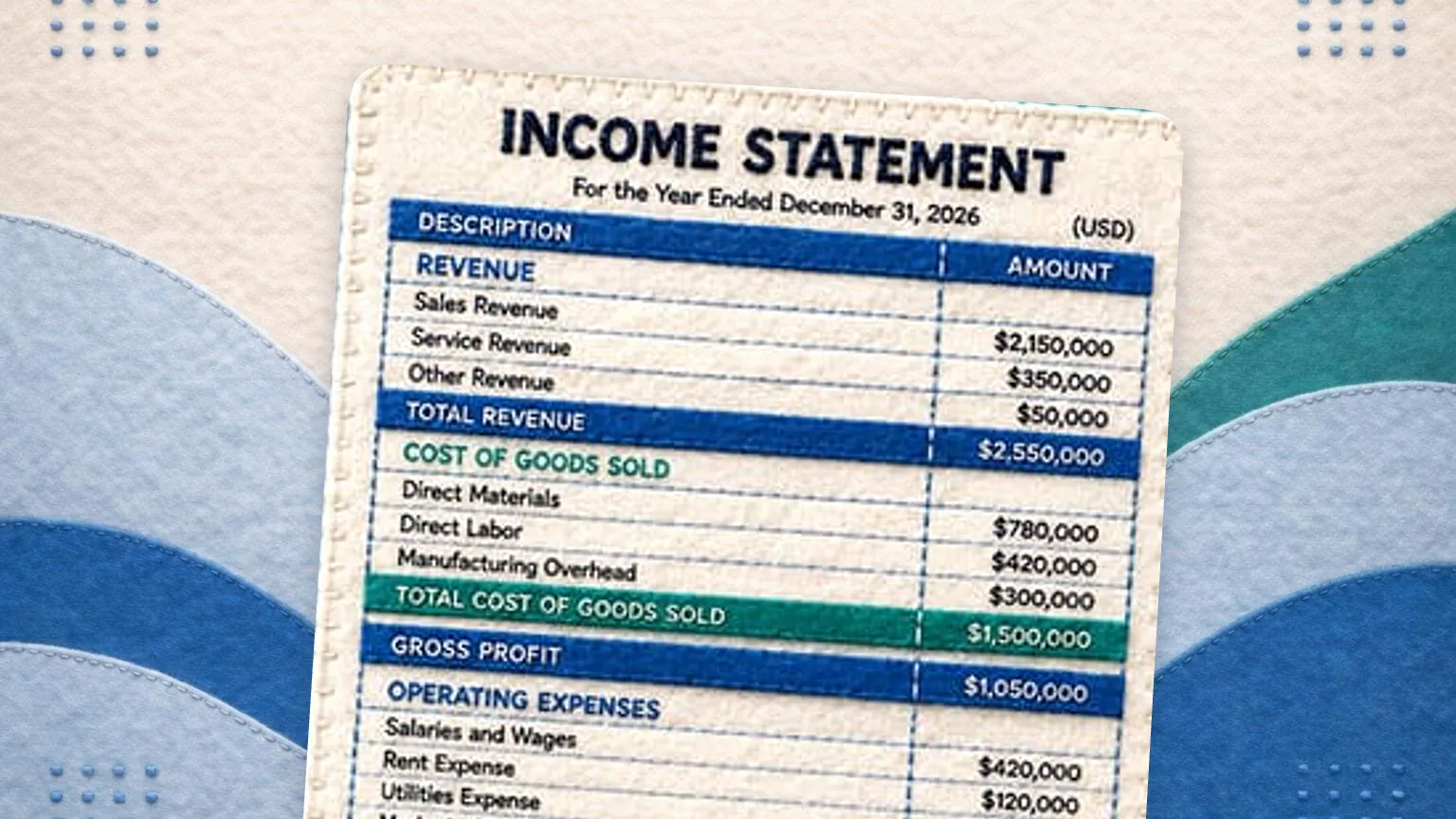
An accountant starts where the bookkeeper stops. The month gets reviewed and adjusted, which means accruals for expenses incurred but not yet billed, prepayments spread across the months they cover, depreciation on fixed assets, and corrections to anything miscoded. Financial statements get produced: an income statement showing performance over a period, a balance sheet showing position at a point in time, and a cash flow statement explaining the difference between profit and money in the bank.
Then the judgment work. Entity structure and whether yours still fits. Tax planning before year end, when it can still change the outcome, rather than in March when it cannot. Whether a margin decline is pricing, cost or mix. Whether the business can support a hire, a lease or a loan. Lender and investor reporting that holds up to questions.
That last category is why cheap accounting is rarely cheap. You are buying judgment, and judgment is the part software does not replace.
Which one you need, by stage
Pre-revenue or a side business. Do your own bookkeeping with software and a disciplined weekly habit, and buy accounting once a year for the return. Volume is low enough that your own time is the cheapest option.
One to five people with real revenue. Bookkeeping becomes a real job. Either block two hours a week and actually keep it, or hand it to a bookkeeper. This is the stage where most businesses fall behind, because the owner does the work that brings in money and the books wait for a quiet week that never arrives. Add an accountant for a year end close and tax filing.
Five to twenty people. You need both, continuously. A bookkeeper monthly, an accountant reviewing quarterly and advising before year end. This is also where accrual accounting starts to matter, because cash basis statements stop describing the business accurately once you carry receivables, payables and deferred revenue.
Twenty people and up. The bookkeeping is a role rather than a task, often an internal hire, and the accounting relationship becomes advisory and compliance rather than production.
Any stage, if you are raising money or selling. Buy the accounting early. Diligence finds every shortcut, and cleaning up eighteen months of books under time pressure costs several times what doing it properly would have.
What each one costs
Software is the cheap part and the prices are public. QuickBooks Online runs from $0 on its Free tier and $38 a month on Simple Start for one user up to $340 for Advanced with twenty five users. Xero is $27, $59 and $97 a month across its three plans, with no per-user license fees. Zoho Books is $0 for one user plus one accountant, $20 for three users and $50 for five. GlassJar is $59 a month for one user, $99 for two and $299 for five, all 50 percent off for the first three months at launch, with a 14 day free trial and no card required.
People cost more than software, and rates vary enough by market, volume and complexity that any single number would mislead you. The useful frame is this: bookkeeping is priced by volume, so ask for a quote based on your transaction count and number of accounts. Accounting is priced by judgment and risk, so a return for a single member LLC and a return for a multi state S corporation are not the same product. Get both quoted separately rather than as one bundled monthly fee, because bundles hide which half you are actually buying.
The expensive version of this decision is the one where you pay nothing for bookkeeping all year and then pay an accountant their hourly rate to do twelve months of it in March, at the worst possible time, with the worst possible records.
Doing some of it yourself
Owners can realistically own categorization and reconciliation, especially with bank feeds doing the first pass. What tends not to work is self serving the judgment layer: accrual treatment, depreciation, equity transactions and tax positions are where errors are invisible until they are expensive.
A reasonable split for a small business is you or a bookkeeper on the monthly recording, software producing the statements, and an accountant reviewing quarterly and owning the return. If you want to see what good output looks like before judging anyone’s work, build one yourself with the free profit and loss statement generator and the free balance sheet template. Both are free and need no account, and knowing the shape of the statement makes it much easier to tell whether the one you are handed is right.
A note on where software helps and where it does not. GlassJar handles the recording layer: transaction entry, accounts payable and receivable, bank reconciliation, budgeting with variance reporting and a period close. It does not do payroll, sales tax filing, 1099 generation, inventory, time tracking or forecasting beyond budgets, and it launched in October 2026, so it is new. No accounting software does the judgment layer, whatever the marketing says.
FAQ
Is bookkeeping part of accounting, or a separate thing?
Bookkeeping is the recording stage of the accounting cycle, so it sits inside accounting as a discipline but is a separate job in practice. Bookkeepers record and reconcile. Accountants adjust, interpret, report and file. The same person can do both, and the skills and hourly rates are different.
Do I need a bookkeeper if I use accounting software?
Software reduces the work and does not remove the judgment. Bank feeds suggest categories and guess wrong often enough to matter, reconciliation still needs someone to chase the differences, and uncategorized transactions pile up silently. If you will reliably do it yourself each week, software is enough. If you will not, a bookkeeper is cheaper than a year of cleanup.
Can an accountant do my bookkeeping too?
Yes, and many firms offer it, often with a bookkeeper on staff doing the monthly work and an accountant reviewing. Ask who actually performs each part and what each costs. Paying accountant rates for data entry is the most common way small businesses overspend on finance.
What do I need before tax time, bookkeeping or accounting?
Bookkeeping first, finished, then accounting. A return is built from reconciled books, so an accountant handed unreconciled records either does the bookkeeping at their rate or files from numbers nobody has verified. Being reconciled through December is the single best thing you can do for your tax bill and your fees.
When does a small business need to switch from cash to accrual accounting?
Practically, when cash basis statements stop describing the business, which happens once you carry meaningful receivables, payables, inventory or deferred revenue. There are also tax rules that can require accrual above certain gross receipts thresholds or when you hold inventory, and those thresholds change, so confirm your current year position with your accountant rather than relying on a figure in an article.
Can one piece of software replace both?
No. Software does the recording layer well and produces the statements, which covers the bookkeeping job and the mechanical part of the accounting one. It does not decide accrual treatment, plan your tax position or tell you whether you can afford a hire. That is the part you hire a person for.
We use cookies to understand how our site is used and to show GlassJar ads to people who have visited. You can opt out at any time on our Your Privacy Choices page.
Functional
Always active
The technical storage or access is strictly necessary for the legitimate purpose of enabling the use of a specific service explicitly requested by the subscriber or user, or for the sole purpose of carrying out the transmission of a communication over an electronic communications network.
Preferences
The technical storage or access is necessary for the legitimate purpose of storing preferences that are not requested by the subscriber or user.
Statistics
The technical storage or access that is used exclusively for statistical purposes.The technical storage or access that is used exclusively for anonymous statistical purposes. Without a subpoena, voluntary compliance on the part of your Internet Service Provider, or additional records from a third party, information stored or retrieved for this purpose alone cannot usually be used to identify you.
Marketing
The technical storage or access is required to create user profiles to send advertising, or to track the user on a website or across several websites for similar marketing purposes.