












Start Understanding Your Business Like an Accountant, Without Becoming One
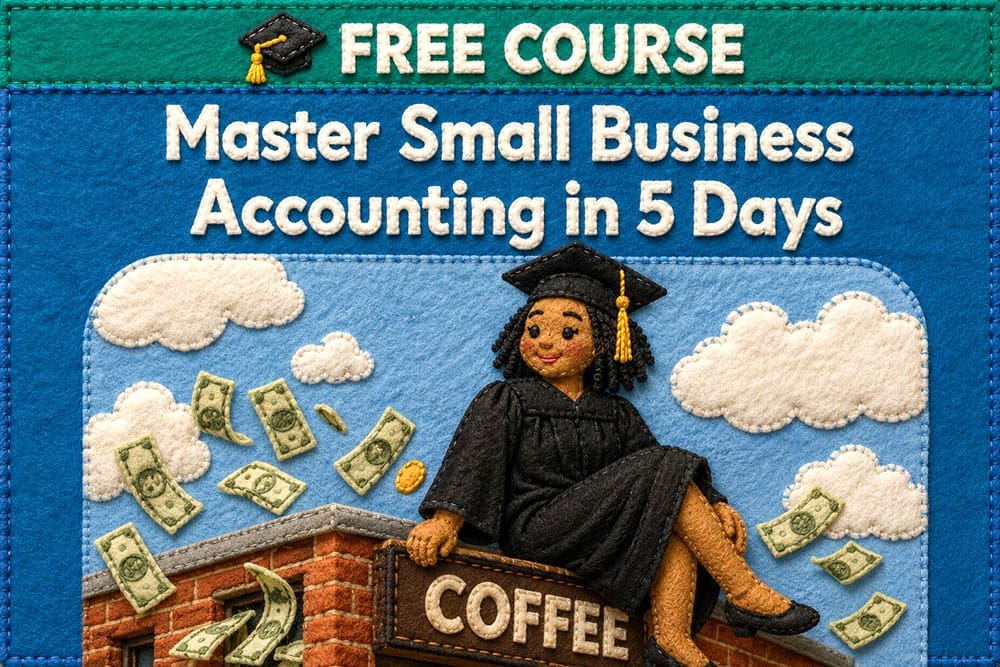
This free 5-day course will give you the confidence to read your reports, understand your numbers, and make informed decisions, so you can have better conversations with your accountant. It’s short, practical, and designed for busy small business owners.
What You’ll Learn in This Course:
📊 Day 1: The 3 Financial Reports You Must Understand
Learn what the Profit & Loss, Balance Sheet, and Cash Flow Statement actually mean and how they work together.
💸 Day 2: Profit vs. Cash, and Why They’re Not the Same
Understand why your profit doesn’t always match your bank balance, and how to track both correctly.
📋 Day 3: What’s Hiding in Your Balance Sheet
Decode your liabilities, assets, and equity, and what they say about your business’s financial health.
📈 Day 4: Spotting Trends in Your Reports
Learn how to compare months, detect patterns, and make better operational decisions.
🧠 Day 5: Make Better Business Decisions With Your Numbers
Use your reports to guide hiring, pricing, budgeting, and more, and bring sharper questions to your accountant.
Why Sign Up?
- Get clarity on the financial reports you’ve been putting off reading.
- Make better decisions by using your numbers to drive growth and head off mistakes.
- Feel confident about your financials instead of second-guessing them or waiting on your bookkeeper.
- Built for business owners, with plain English and practical steps and no accounting degree required.
Who is This For?
- Small business owners who want financial clarity
- Freelancers and solopreneurs managing their own finances
- Founders and operators who want better reporting without the fluff
- Anyone who uses accounting software but doesn’t fully understand their reports
Sign Up Now. It’s 100% Free!

Learn Financial Statements and Take Control of Your Business Finances
Running a business without understanding your financial statements is a lot like flying a plane without instruments, because you can tell you’re moving but you can’t tell whether you’re climbing or falling. Learning financial statements gives you the visibility to make confident decisions and avoid costly mistakes. You don’t have to be an accountant to read your financial reports and use them to drive growth, protect cash flow, and build a stronger business.
Why Learning Financial Statements Matters for Small Business Owners
Every small business produces financial data, although the financial data is only useful to a business owner who knows how to interpret the financial data. Learning financial statements gives a business owner access to information about what is happening inside the business financially, including trends, inefficiencies and overall performance, and that information allows the business owner to plan ahead with greater certainty. Financial literacy has become a core skill of modern business ownership rather than an optional extra.
What It Means to Learn Financial Statements
Learning financial statements involves more than recognizing the layout of a balance sheet or a P&L. Learning financial statements involves understanding how each financial report works, how each financial report connects to the other financial reports, and how each financial report can be used as a decision-making tool. A business owner who learns financial statements learns which numbers to watch, how to detect warning signs and how to analyze financial performance on the basis of data rather than guesswork, and the purpose is to become a better informed business owner rather than to become an accountant.
The Three Financial Statements You Need to Understand
Three primary financial statements should be learned by every business owner: the profit and loss statement, the balance sheet and the cash flow statement. Taken together, the three primary financial statements provide a full view of the financial health of the business, and each financial statement answers a different set of questions about the business.
Profit and Loss Statement
The profit and loss statement, also known as the income statement, shows the revenues, expenses and resulting profit or loss of the business over a specific period of time. The profit and loss statement is usually the first financial statement studied by a business owner who is learning financial statements. The profit and loss statement shows how much the business earned during the month, which costs were the largest and whether the business was profitable, and an understanding of the profit and loss statement allows a business owner to manage costs, evaluate pricing and assess whether the business model is working.
Balance Sheet
The balance sheet shows what the business owns, what the business owes and what remains for the owner, organized into the three key categories of assets, liabilities and equity. When the balance sheet shows more liabilities than assets, the excess of liabilities over assets is a sign that the business may be financially unstable. Reading the balance sheet shows the financial position of the business at a single point in time, and the balance sheet indicates whether the business has enough resources to meet obligations as the obligations fall due and whether the equity of the business is growing over time.
Cash Flow Statement
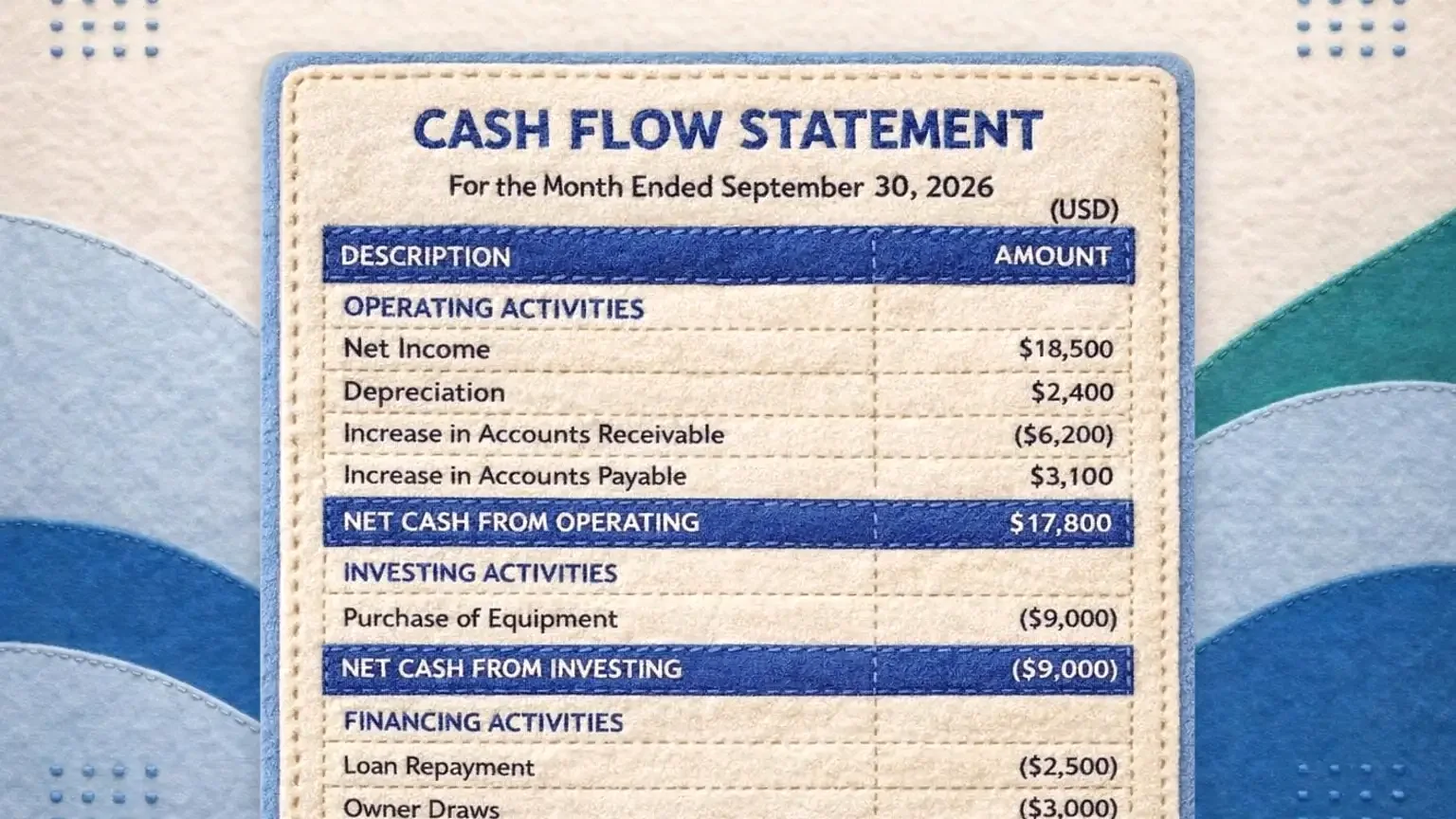
The cash flow statement tracks how money moves into and out of the business, and the cash flow statement divides cash activity into three categories, which are operating activities, investing activities and financing activities. Many businesses appear profitable on paper but still run into difficulty because cash is not managed effectively. Learning financial statements includes learning to monitor cash inflows and cash outflows, so that the business is prepared when payments for payroll, inventory or rent fall due.
How to Compare Statements Over Time
A single financial statement provides a snapshot of the business at one point in time or for one period, whereas a review of financial statements across several periods allows trends to be identified and changes to be anticipated. Comparing monthly, quarterly or yearly reports is an essential part of financial analysis, because the comparison shows which months are the most profitable, when expenses rise sharply and how the cash position of the business changes over time. Comparing financial statements over time allows a business owner to make informed plans instead of reacting to surprises.

Learn How Financial Statements Work Together
Each financial statement provides a different part of the overall financial picture of the business. The profit and loss statement shows whether the business is earning a profit, although the profit and loss statement does not show how much cash the business actually holds. The cash flow statement shows how the bank balance of the business is affected by operations, loans and investments, and the balance sheet shows the long-term effect of financial decisions on the business. Learning financial statements means understanding how the profit and loss statement, the balance sheet and the cash flow statement work together to give a complete view of the business.
Using Financial Statements to Make Better Decisions
Once a business owner can read financial statements, the next stage is learning to use financial statements to run the business more effectively. The profit and loss statement supports the setting of revenue goals and the reduction of wasteful spending, the balance sheet supports the monitoring of debt and the financial stability of the business, and the cash flow statement supports the timing of investments and preparation for slow seasons. Strategic use of financial statements leads to better decisions and reduces the stress associated with financial decision-making.
How to Improve Pricing and Margins
Many business owners underprice services because the true cost of delivering those services is not known. Learning financial statements builds an understanding of cost of goods sold, gross margin and contribution margin, and an understanding of cost of goods sold, gross margin and contribution margin allows prices to be set at a level that covers costs and generates sustainable profit. Financial statements also show which services or products are the most profitable and which services or products are reducing the overall profitability of the business.
How to Prepare for Taxes
Financial statements become essential when tax season arrives. The ability to read financial reports makes year-end filings easier to complete and tax documentation easier to prepare, and the ability to read financial reports helps ensure that every eligible deduction is claimed. Learning financial statements in advance of tax season saves hours of paperwork, reduces the risk of errors and makes work with an accountant or tax preparer more productive.
How to Increase Investor Confidence
A business that applies for a business loan, a credit line or outside investment will be expected to present financial statements, and lenders and investors expect the business owner to understand the numbers in those financial statements. A business owner who can discuss revenue, expenses, cash position and liabilities with confidence builds trust and credibility with lenders and investors. Learning financial statements prepares a business owner for discussions with lenders and investors and improves the likelihood of securing the funding needed for growth.
Learn at Your Own Pace
If you’re just starting out, there’s no need to master everything at once, because learning financial statements works best one report at a time. Start with your profit and loss report, move on to the balance sheet, and once that feels comfortable, add the cash flow statement to your regular review. Every report you add brings a little more clarity, a little more control, and a lot more confidence in the decisions you make for your business.